
Cutting Board Size and Material: Carving, Prep, Serving
By the Urban Picks team · Updated
A cutting board should be bigger than the pile of food you cut, thick enough to stay put and made of a material you are willing to care for. Our boards run from an 8 x 6 in board only 0.25 in thick to a 24 x 18 in teak carving board 1.5 in thick, and they differ in what matters at the counter: a juice groove, a meat grip, non-slip feet, a hanging hole, and whether the dishwasher is allowed. Below, the boards are sorted by the job: carving a roast, everyday prep, serving cheese and bread. Ships to US addresses only.
Key takeaways
- Pick the board by your biggest job: around 14 x 11 in for everyday prep, 16 x 12 in or larger for carving.
- For carving, choose a board with a juice groove or rim: the carving board, the teak board, the 17 in acacia board or the board with pour corners.
- Boards listed as dishwasher safe are the slim board, the pour-corner board and the scoop board; wood and bamboo are washed by hand and oiled.
- The slim board is 0.25 in thick and has a hanging hole; the teak board is 1.5 in thick.
- For cheese and bread, the live-edge acacia board comes in 18, 24 and 30 in and the round cheese board hides four tools.
How big should a cutting board be?
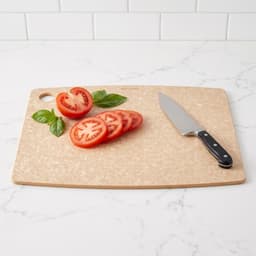
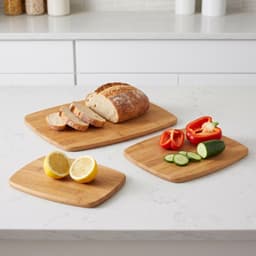
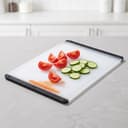
Choose the board by the biggest job you do on it. For everyday vegetable prep, a board around 14 x 11 in leaves room for a pile of cut food beside the one you are cutting. Our slim board with a hanging hole comes in 8 x 6, 11.5 x 9, 14.5 x 11.25 and 17.5 x 13 in. The bamboo set has three boards: 14 x 11 in, 10 x 8 in and 8 x 5.5 in.
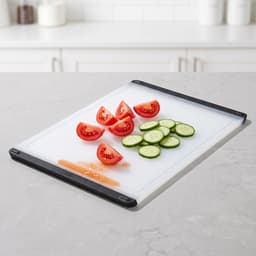
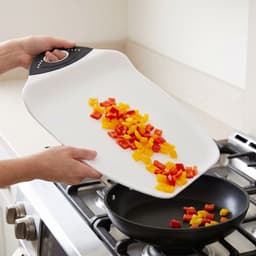
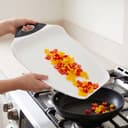
The reversible board with pour corners measures 14.75 x 10.5 in, and the scoop board comes in 13 x 9.5 in and 15 x 11 in. For carving, go bigger: our carving boards start at 16 x 12 in and go up to 24 x 18 in.
Sizes are written length by width, and thickness is listed for the wood boards. Measure your counter space and your sink before you choose a large board, because a board that does not fit in the sink is a board you wash by hand at an angle.
- Cutting Board with Hanging Hole and Slim Profile
From $23.27
Daily prep, dishwasher cleanup, and storage that takes little room.
- Bamboo Cutting Boards with Reversible Sides, Set of 3
$26.64
Three sizes for a quick snack, dinner prep or a small serving spread.
- Reversible Cutting Board with Pour Corners, Translucent
$36.78
A flat side for vegetables and a grooved side for juicy cuts.
- Scoop Cutting Board with Curved Sides and Grip Handle
From $28.83
Chop vegetables, then guide them into the pan.
Which cutting board is best for carving a turkey or roast?
A carving board needs a groove or rim for the juices and a grip that holds the roast. Four of our boards have one.
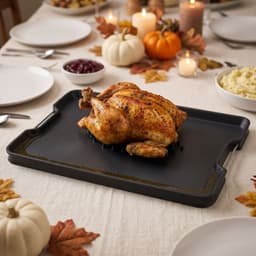
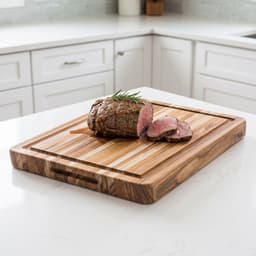
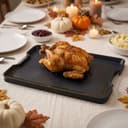
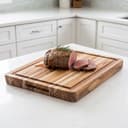
The double-sided carving board has a meat grip in the center of one side and a sloped base with a raised rim that collects juices. It comes in Large, 16.14 x 11.42 in, and XL, 18.54 x 13.15 in, each 0.98 in thick, with stainless-steel handles and rubber edges. The teak carving board has a groove all around the edge and a smooth reverse. It comes in 16 x 12, 20 x 15 and 24 x 18 in, each 1.5 in thick, with recessed end handgrips.
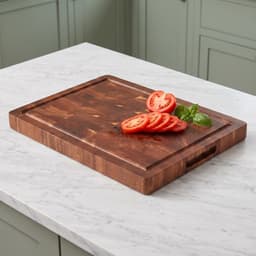
The 17 in end-grain acacia board has a flat side and a side with a perimeter groove, with recessed handles at the sides. The reversible board with pour corners has a drip groove on one face and channels at the corners so you can pour the liquid away. To choose a size, measure the roasting pan you use: a board longer than the pan has room for the roast once it comes out.
- Double-Sided Carving Board with Meat Grip
From $41.86
Carve on the grip side, then flip for everyday prep.
- Teak Carving Board with Juice Groove
From $86.22
Carve on the grooved side, then flip for everyday prep.
- 17 in Reversible Cutting Board with Juice Groove
$70.81
A flat side for prep and a grooved side for juicy ingredients.
- Reversible Cutting Board with Pour Corners, Translucent
$36.78
A flat side for vegetables and a grooved side for juicy cuts.
Wood, bamboo or plastic: which is easier to care for?
Plastic boards go in the dishwasher; wood and bamboo boards are washed by hand and oiled. Our slim board with a hanging hole, the reversible board with pour corners and the scoop board are all listed as dishwasher safe.
The end-grain acacia board is hand wash only: wash with warm soapy water, dry immediately, do not soak or use a dishwasher, and oil it periodically. The bamboo set has the same hand-wash routine, with mineral oil applied occasionally. The teak board arrives pre-oiled and asks for mineral oil two to three times a month. The live-edge acacia serving board is wiped with a damp cloth and is not submerged in water.
If you want one board for everything and no oiling, pick a dishwasher-safe board. If you want a board that goes from the counter to the table, a wood board is the one you will not mind seeing out.
- End-Grain Cutting Board with Acacia Wood
From $81.14
A substantial wood surface for chopping and serving.
- Bamboo Cutting Boards with Reversible Sides, Set of 3
$26.64
Three sizes for a quick snack, dinner prep or a small serving spread.
- Scoop Cutting Board with Curved Sides and Grip Handle
From $28.83
Chop vegetables, then guide them into the pan.
- Cutting Board with Hanging Hole and Slim Profile
From $23.27
Daily prep, dishwasher cleanup, and storage that takes little room.
Which board for serving cheese, bread and appetizers?
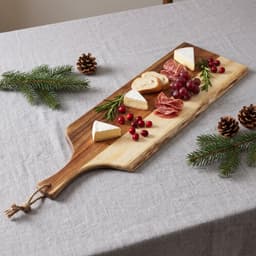
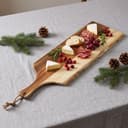
A serving board is meant to be seen, so grain and shape matter. The acacia serving board with a live edge is 8 in wide and comes in 18, 24 and 30 in lengths, 0.75 to 0.8 in thick. It has a rope loop for hanging, either side can be used for serving, and it also works for cutting vegetables.
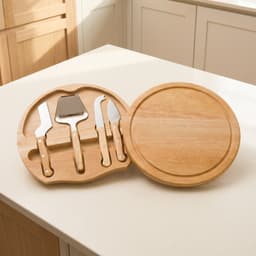
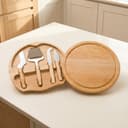
The round cheese board is rubberwood, 10.2 in across and 1.6 in thick, with over 81 square inches of cutting surface. Its top swivels aside to show four stainless steel tools: a cleaver, a planer, a fork-tipped knife and a hard cheese knife with a spreader. A groove around the top catches cheese brine or fruit juice.
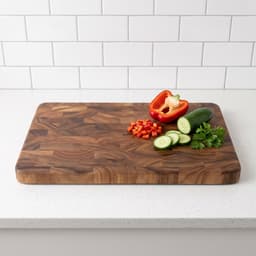
The end-grain acacia board, in 20 x 14 in or 14 x 14 in, is described for preparing dinner and for arranging bread and cheese for the table.
- Acacia Serving Board with Live Edge and Rope Handle
From $42.56
A wood serving paddle for cheese, bread, and shared appetizers.
- Round Cheese Board with Hidden Tools, 10 in, Rubberwood
$39.17
Four cheese tools tuck beneath the swivel-open top.
Which board for a small kitchen?
A thin board stores in little room. The slim board is only 0.25 in thick and has a hanging hole, so it can hang beside your other tools. Its smallest size is 8 x 6 in, and the largest is 17.5 x 13 in.
The bamboo set gives three sizes in one purchase, so a quick snack does not need the largest board. The thick boards, the 1.25 in end-grain acacia and the 1.5 in teak, are for a counter where the board can stay out.
All ten boards side by side
Knives, food and oil shown in photos are not included.
- Size
- Large 16.14 x 11.42 in; XL 18.54 x 13.15 in
- Material
- Polypropylene, stainless handles
- Best for
- Carving a roast
- Good to know
- Meat grip, juice rim, rubber edges; 0.98 in thick
- Size
- 16 x 12, 20 x 15 or 24 x 18 in; 1.5 in thick
- Material
- Edge-grain teak
- Best for
- Carving and everyday prep
- Good to know
- Juice groove; pre-oiled; hand wash; oil 2-3 times a month
- Size
- 17 in nominal length
- Material
- End-grain acacia
- Best for
- Juicy fruit and meat; serving
- Good to know
- Flat side and juice-groove side; recessed handles
- Size
- 20 x 14 in or 14 x 14 in; 1.25 in thick
- Material
- End-grain acacia
- Best for
- Prep; bread and cheese at the table
- Good to know
- Hand wash and dry at once; oil periodically
- Size
- 14 x 11, 10 x 8 and 8 x 5.5 in
- Material
- Bamboo
- Best for
- Snacks, prep and a small spread
- Good to know
- Reversible, no groove; hand wash; oil occasionally
- Size
- 8 x 6, 11.5 x 9, 14.5 x 11.25 or 17.5 x 13 in
- Material
- Slim 0.25 in board
- Best for
- Weeknight vegetable prep
- Good to know
- Hanging hole; dishwasher safe
- Size
- 14.75 x 10.5 in
- Material
- Non-porous, translucent with black ends
- Best for
- Meat on one face, vegetables on the other
- Good to know
- Drip groove, pour corners, non-slip feet; dishwasher safe
- Size
- 13 x 9.5 in or 15 x 11 in
- Material
- Polypropylene
- Best for
- Moving chopped food into a pan
- Good to know
- Curved sides, grip handle, non-slip feet; dishwasher safe
- Size
- 18, 24 or 30 in long, 8 in wide
- Material
- Acacia with a rope loop
- Best for
- Cheese, bread and appetizers
- Good to know
- Live edge; wipe with a damp cloth; do not submerge
- Size
- 10.2 in across, 1.6 in thick
- Material
- Rubberwood with steel tools
- Best for
- Cheese for a few guests
- Good to know
- Swivel top hides four tools; groove catches brine
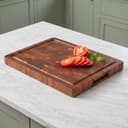
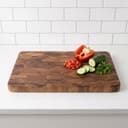
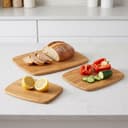
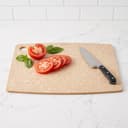
| Product | Size | Material | Best for | Good to know |
|---|---|---|---|---|
| Large 16.14 x 11.42 in; XL 18.54 x 13.15 in | Polypropylene, stainless handles | Carving a roast | Meat grip, juice rim, rubber edges; 0.98 in thick | |
| 16 x 12, 20 x 15 or 24 x 18 in; 1.5 in thick | Edge-grain teak | Carving and everyday prep | Juice groove; pre-oiled; hand wash; oil 2-3 times a month | |
| 17 in nominal length | End-grain acacia | Juicy fruit and meat; serving | Flat side and juice-groove side; recessed handles | |
| 20 x 14 in or 14 x 14 in; 1.25 in thick | End-grain acacia | Prep; bread and cheese at the table | Hand wash and dry at once; oil periodically | |
| 14 x 11, 10 x 8 and 8 x 5.5 in | Bamboo | Snacks, prep and a small spread | Reversible, no groove; hand wash; oil occasionally | |
| 8 x 6, 11.5 x 9, 14.5 x 11.25 or 17.5 x 13 in | Slim 0.25 in board | Weeknight vegetable prep | Hanging hole; dishwasher safe | |
| 14.75 x 10.5 in | Non-porous, translucent with black ends | Meat on one face, vegetables on the other | Drip groove, pour corners, non-slip feet; dishwasher safe | |
| 13 x 9.5 in or 15 x 11 in | Polypropylene | Moving chopped food into a pan | Curved sides, grip handle, non-slip feet; dishwasher safe | |
| 18, 24 or 30 in long, 8 in wide | Acacia with a rope loop | Cheese, bread and appetizers | Live edge; wipe with a damp cloth; do not submerge | |
| 10.2 in across, 1.6 in thick | Rubberwood with steel tools | Cheese for a few guests | Swivel top hides four tools; groove catches brine |
Order in time
For the best chance of delivery by December 24, order by Thursday, December 10. That date gives the best chance, not a guarantee. Ships to US addresses only. Unused items can be returned within 30 days, and return shipping is on the buyer unless the item arrived damaged, defective or wrong.
Questions
- What size cutting board do I need?
- Around 14 x 11 in suits everyday prep, because it leaves room for the cut food. For carving a roast, choose 16 x 12 in or larger: our carving boards run from 16 x 12 in to 24 x 18 in.
- Which cutting boards have a juice groove?
- Four: the double-sided carving board, the teak carving board, the 17 in end-grain acacia board and the reversible board with pour corners. The cheese board also has a groove for brine and juice.
- Which cutting boards can go in the dishwasher?
- The slim board with a hanging hole, the reversible board with pour corners and the scoop board are listed as dishwasher safe. The wood and bamboo boards are not: wash them by hand and dry them at once.
- Do wood cutting boards need oil?
- The end-grain acacia board says to oil it periodically, the bamboo set says to apply mineral oil occasionally, and the teak board says to apply mineral oil two to three times a month. The teak board arrives pre-oiled.
- What is the thinnest cutting board?
- The slim board, at 0.25 in thick, with a hanging hole. The thickest is the teak carving board at 1.5 in.
- Which board is best for cheese?
- The live-edge acacia serving board, 8 in wide in 18, 24 and 30 in lengths, or the round cheese board with four hidden tools, 10.2 in across.
- Can I cut on the live-edge serving board?
- Yes. Its description says both sides can be used for serving and that it also works for cutting vegetables. Wipe it with a damp cloth and do not submerge it in water.
Related picks

Double-Sided Carving Board with Meat Grip
Carve on the grip side, then flip for everyday prep.

Teak Carving Board with Juice Groove
Carve on the grooved side, then flip for everyday prep.

17 in Reversible Cutting Board with Juice Groove
A flat side for prep and a grooved side for juicy ingredients.

End-Grain Cutting Board with Acacia Wood
A substantial wood surface for chopping and serving.

Bamboo Cutting Boards with Reversible Sides, Set of 3
Three sizes for a quick snack, dinner prep or a small serving spread.

Cutting Board with Hanging Hole and Slim Profile
Daily prep, dishwasher cleanup, and storage that takes little room.

Acacia Serving Board with Live Edge and Rope Handle
A wood serving paddle for cheese, bread, and shared appetizers.

Round Cheese Board with Hidden Tools, 10 in, Rubberwood
Four cheese tools tuck beneath the swivel-open top.
Questions about a specific product? Email support@urban-picks.com or see the FAQ.